Brakes wear gradually, so most people don’t notice how much they’ve faded until someone else drives the car. If anything about your brakes has changed, get them checked.
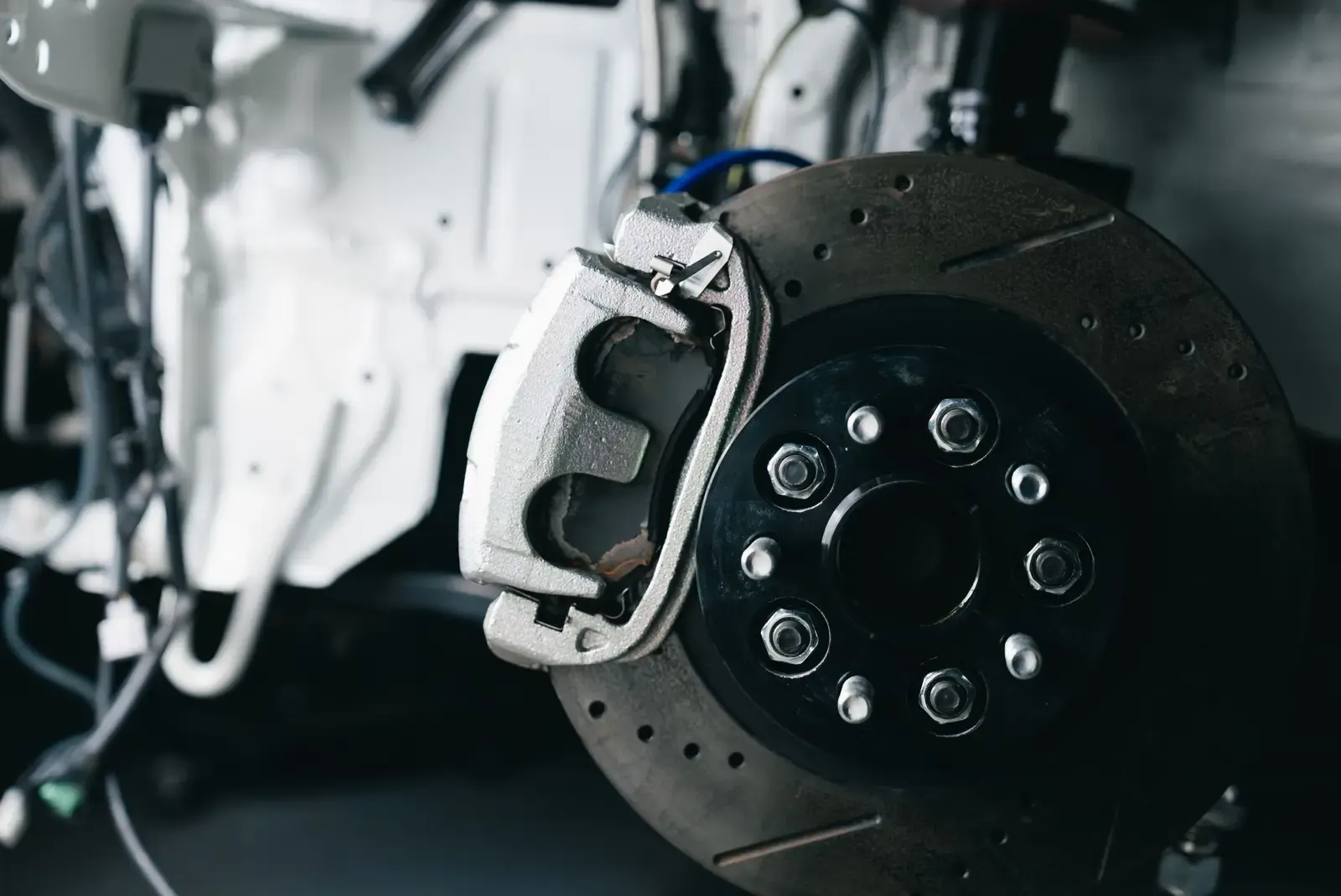
Signs your brakes need attention
- Squealing or squeaking when you brake
- Grinding or scraping, often metal on metal
- The car pulls to one side under braking
- A soft or spongy pedal, or one that sinks
- Vibration through the pedal or steering wheel
- The brake warning light is on
- The handbrake needs pulling higher than it used to
Pads, discs and calipers
Pads and discs are replaced in pairs across an axle so the car brakes evenly. Calipers can stick, especially on cars that stand for a while, which wears one side faster and drags on the wheel. We’ll check the whole system, not just the part that’s making the noise.
Brake fluid
Brake fluid absorbs moisture over time, which lowers its boiling point and makes the pedal feel soft under heavy braking. Most manufacturers ask for a change every two years. It’s a quick job and an easy one to forget.
Hills, short trips and sea air
Steep Island hills work brakes hard, and salty air speeds up corrosion on discs and pipes, especially on cars that don’t get driven every day. If your car spends a lot of time parked near the coast, have the brakes looked at with every service.
Common questions
How long do brake pads last?
It depends a lot on how and where you drive. We’ll measure what’s left and give you a rough idea of how long you’ve got.
Is it safe to drive if my brakes are grinding?
No. Grinding usually means the pads are worn through to the metal. Get it checked as soon as possible.